Showing posts with label Pork. Show all posts

Sunday, September 26, 2010

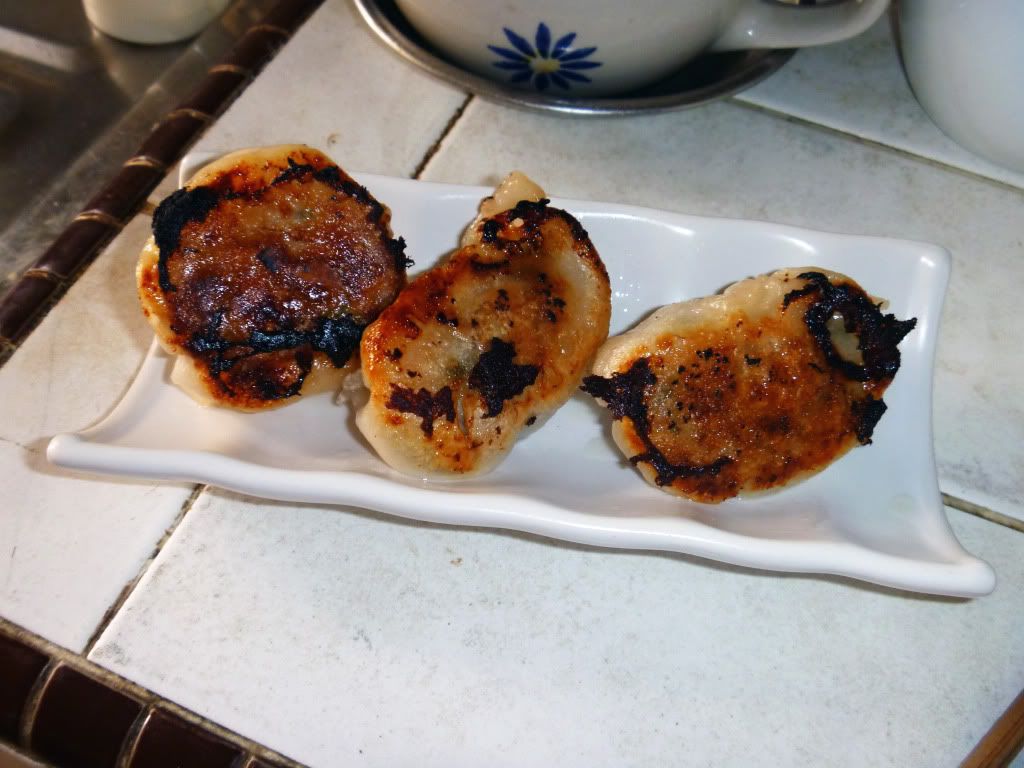
Prawn/Pork Fried Gyoza

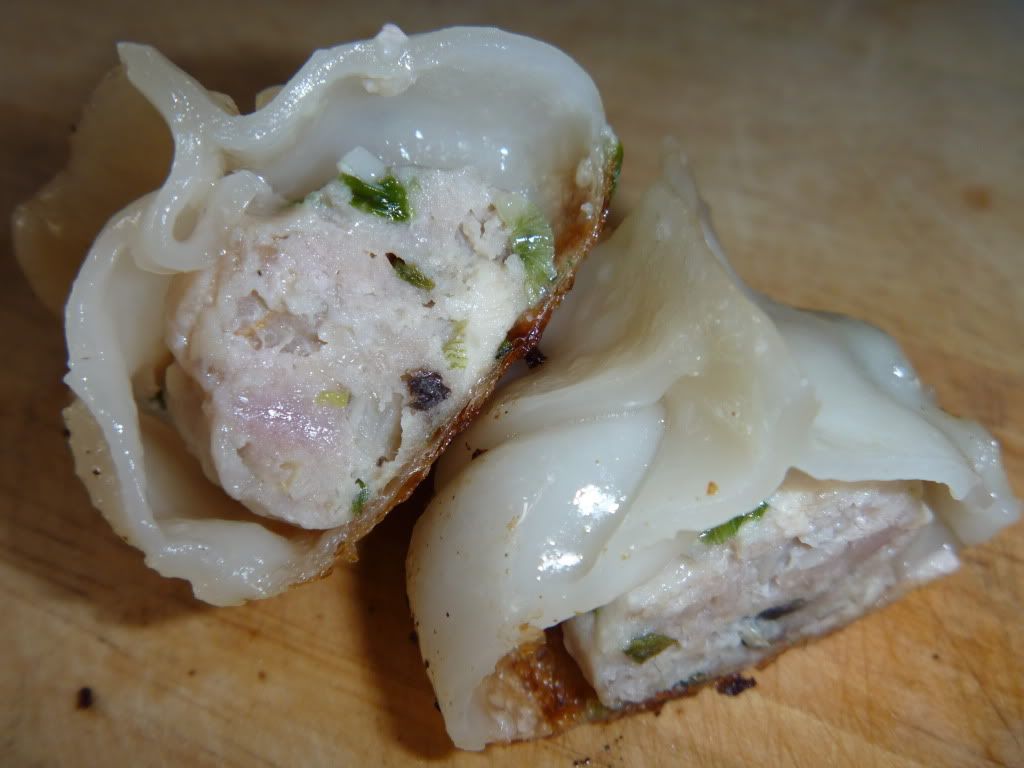
Lately, I have been craving for fried gyoza and I decide to have it for breakfast today. For those “十指不占阳春水“ translate literally to those who doesn't do household chores like cooking or cleaning would suggest going to foodcourt or restaurant Ding Tai Fung "鼎泰豐" to settle the craving. Unfortunately, the gyoza offered by the foodcourt or restaurant are unable to satisfied my palate for a more personalized and customize gyoza. I had experiment with many combination of gyoza fillings and by far this is the most flavorful combi that I had concocted. Without further ado, let proceed with the recipe.


Prawn/Pork Fried Gyoza
  • 240gm of Minced Pork
  • 1 bowl of De-Shell Raw Prawn
  • 4 Brown Mushroom finely diced
  • 1 tablespoon of finely diced Garlic
  • 1 tablespoon of finely diced Ginger
  • 2 stalk of finely chopped Spring Onion
  • 1/2 slab of firm Tofu
  • 2 teaspoon of Knorr Hao Chi powder
  • 2 teaspoon of Maggi Chicken essence
  • 1 teaspoon of light soya sauce
  • 1 packet of gyoza skin (available at Shen Siong Supermart)
  • 1 tablespoon of Mirin
For my previous gyoza filling recipes, I always add egg as a binding agent to hold the gyoza filling. From my experience, pan fry egg-bind gyoza filling tend to be quite dry. This time, I decide to replace it with tofu as the binding agent. In a big mixing bowl, mash the firm tofu and add in the rest of the ingredients - minced pork, prawn, mushroom, spring onion, garlic, ginger.

Next add in the flavoring agent - Hao Chi powder, Maggi Chicken essence, soya sauce and mirn into the mixing bowl. Now it is time to get your hand dirty. With a circular motion, blend the mixture until it sticky enough to form a ball. Next it time to fold the gyoza, you can follow the instruction in this video to fold your gyoza. You can fold all your gyoza and place them on tray with wax paper and freeze them in batches and store them in plastic bag. This allow you to take out the amount you need.


Fire up the non-stick frying pan with drizzle of cooking oil, and add in the frozen gyoza let it pan fry for 5 mins then add in 1/4 cup of water and cover with the fry pan and let it steam until the water dry up and wait for another 10 mins and serve. If you prefer much crispy base, leave it for addition 5 mins or more.


Saturday, December 19, 2009

Thickest Curry - Go! Go! Curry

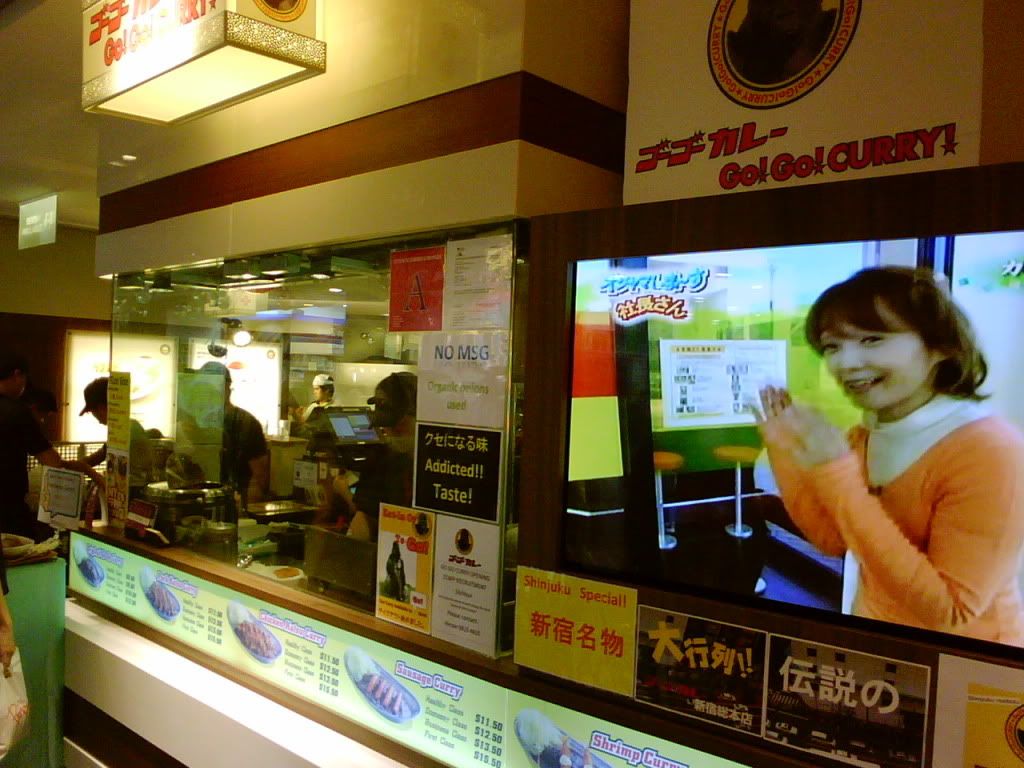
Another Japanese franchise restaurant (Go! Go! Curry) have bare it fangs in B4 of ION Orchard, competing for a share of Singapore F&B pie with fellow Japanese restaurants Ginza Barin, Gindaco & Aoba. You will a LCD broadcasting in japanese about Go! Go! Curry exploits in other countries and the number of people queuing just to have a GO for their curry. As there isn't much a crowd that day, so we decide to give it a GO as well. 


We were offered a paper menu showing the wide options Go! Go! Curry offer. You will be stumble why they have so many classes (Healthy, Economy, Business & First) amidst the curry type selection. The class is actually determine the amount of rice you get for your curry type you select. You don't expect they will give you additional or bigger piece of Pork Katsu if you order First or Business Class. What you will be getting will be bigger rice serving as you go down the classes. From what we gather about Go! Go! Curry's curry gravy was made from organic onions and no sugar were added to sweeten the curry, only organic onions that were cooked under low heat until caramelized till pure sweetness is added to make Go! Go! Curry gravy and the color of the curry gravy is black reminding you of black sesame paste.


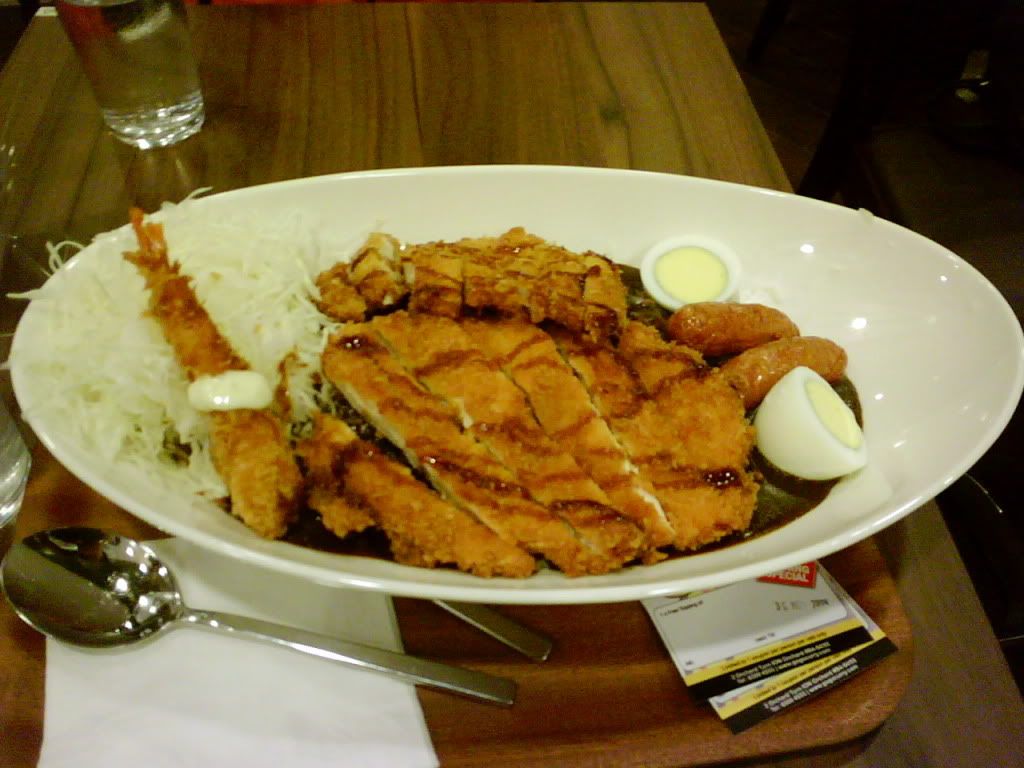
After browsing through the menu, we decide to have Grand Slam as it is the only curry selection with all the toppings offered in under one. So we happily order 2 set of Grand Slam ($18.50 SGD), least to our knowledge, we had opened a door to Jigoku (meaning Hell if translate from Japanese). Before our orders served, we noticed that Go! Go! Curry's curry gravy seem to be premium and they do not seem to serve it in abundance if compared to other curry rice I had in Waraku or Tampopo. So I order extra curry topping of $3.00 for both of us.  


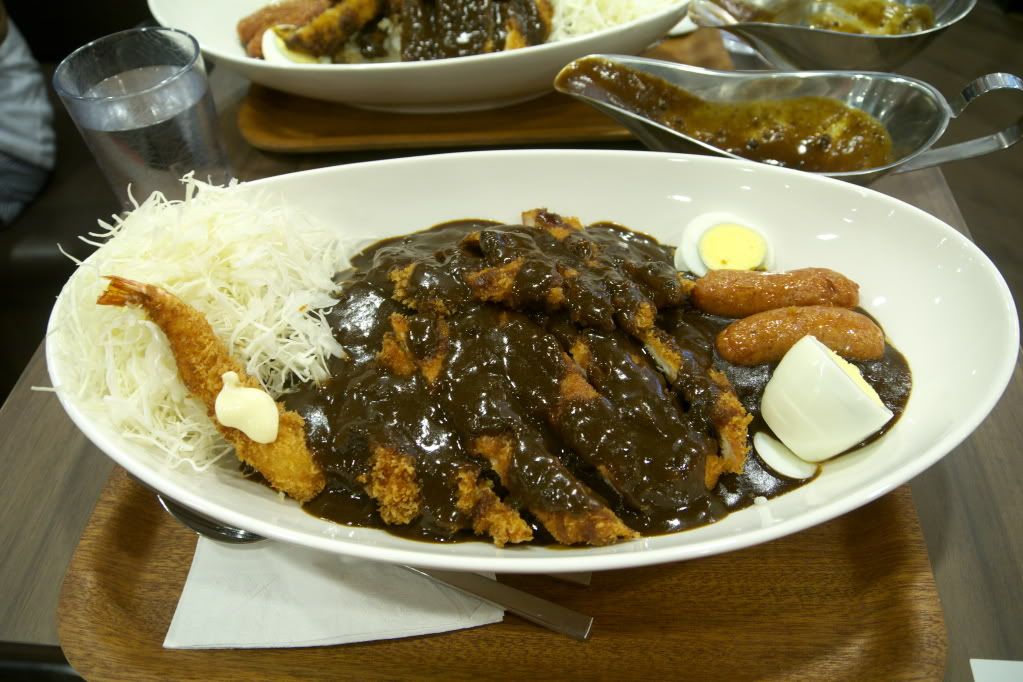
When our Grand Slam was served to us, we got a shock of our life the sheer size of Grand Slam. Grand Slam is a Business Class ranking curry that imbued with all the curry toppings that is enough to feed 3 adults. Neighboring Go! Go! Curry patrons especially a particular Japanese family from opposite table were conversing and making reference to our pure boldness or foolishness to order Grand Slam.

With a do or die conviction, we grit our teeth and assault the curry like mountaineer assaulting Mt Everest. After drenching the extra curry gravy topping on the katsu, we scoop a big of the black curry to taste. Go! Go! Curry is the thickest curry gravy I ever tasted. The sweetness in the curry isn't those "artificial" sweetness you get from adding sugar. It is purely derived from the onions. The curry is rich in texture but in flavor department it is not overwhelming with curry spices that is prevailing in other curry rice offered in Singapore. 


.

It is a love or hate depending on individual as it is very thick until you sometimes find you might not have enough to last your whole meal. Luckily, we order extra curry gravy toppings to avert this issue. The chicken and pork katsu fried till very crispy while still maintaining it tender. My friend did complain the pork katsu too thin and do not have enough fat as compared to Tampopo. At this price with so much toppings, such omission is permissible as long the katsu is fresh and not dry. The sausage and the ebi fry doesn't impress me much. The hardboiled egg was overcook as you can see sulphur rings in them.

It took us quite a while to conquer this Mt Everest curry rice with my friend trailing behind barely alive. Go! Go! Curry is a unique curry rice on its own but if they are going to establish their roots in Singapore, they need to do better than just offering curry rice as Singaporean are fickle epicurean that crave for food variety and there are other major Japanese F&B are also offering varieties of curry rice.   
Friday, October 23, 2009

Pasandra Pork Curry

Pasanda Curry is a popular  Pakistani/North Indian curry meat dish originate from a meal served in the Court of the Moghul Emperors. Pasanda was originally made from leg of a lamb, flatten into strips. Mughal empire religious belief originate from muslim, therefore Pasanda Curry is only available in lamb, beef, chicken or prawn.

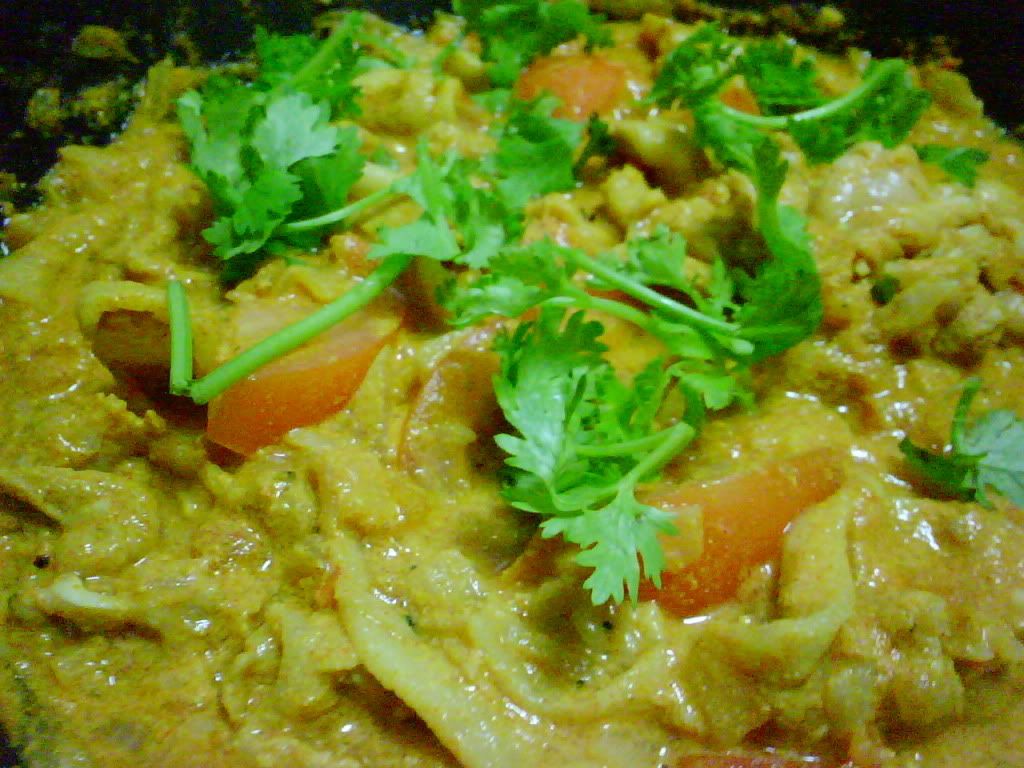
I decide to add a twist of chinese element into Pasanda Curry. Instead of using the meat commonly use for Pasanda Curry, I decide to use pork as the main ingredient for Pasanda Curry. I decide to use sliced Pork Belly as it is readily available in local supermarket in Singapore and the fat layered between the flesh will add additional flavour to the Pasanda Curry.  The Pasanda Pork Curry came out pretty well within my expectation. It is pretty thick and warmly spiced with a slight tang. For those who don't like tangy curry, you could replace yogurt with whipping cream or coconut cream. It is best serve with rice or naan.


Pasandra Pork Curry
  • 125g Pork Belly Thin Slices
  • 1 Medium Tomato Chopped Finely
  • 1 Onion Chopped Finely
  • 1 Teaspoon Ginger Puree
  • 1 Teaspoon Garlic Puree
  • 4 Oz Water
  • 1 Tablespoon Oil
  • 1 Teaspoon Ketchup
Marinade
  • 2 Tablespoons Plain Yogurt
  • 1/2 Teaspoon Turmeric Powder
  • 1 Teaspoon Chili Powder
  • 1 Teaspoon Coriander Powder
  • 1 Teaspoon Cumin Powder
  • 1 Teaspoon Freshly Ground Black Pepper
  • Salt
Combine all the dry spices and salt in a mixing bowl and add in the yogurt and stir it into a paste. Add in the sliced pork and made sure the paste is evenly coated in every pork slice and leave it to marinade in the fridge overnight or at least 3 hours.

Heat a non-stick pan and add in the oil. Add in the chopped onion and cooked until it turn brown and soften. Add in the chopped ginger and garlic and fry it till you smell fragrant release by the garlic and ginger. Add in the chopped tomato. You can add a bit of water if you find the mixture too dry. Fry until the oil separate then add in the marinate pork. Turn up the heat and fry for 5 mins add in rest of the water and turn down the flame and let it simmer for 10 mins then you are ready to serve it over rice or naan. As the curry aged, it get more flavorful.

Sunday, September 20, 2009

Home Style Lok Lok - Skewer Mala Hotpot

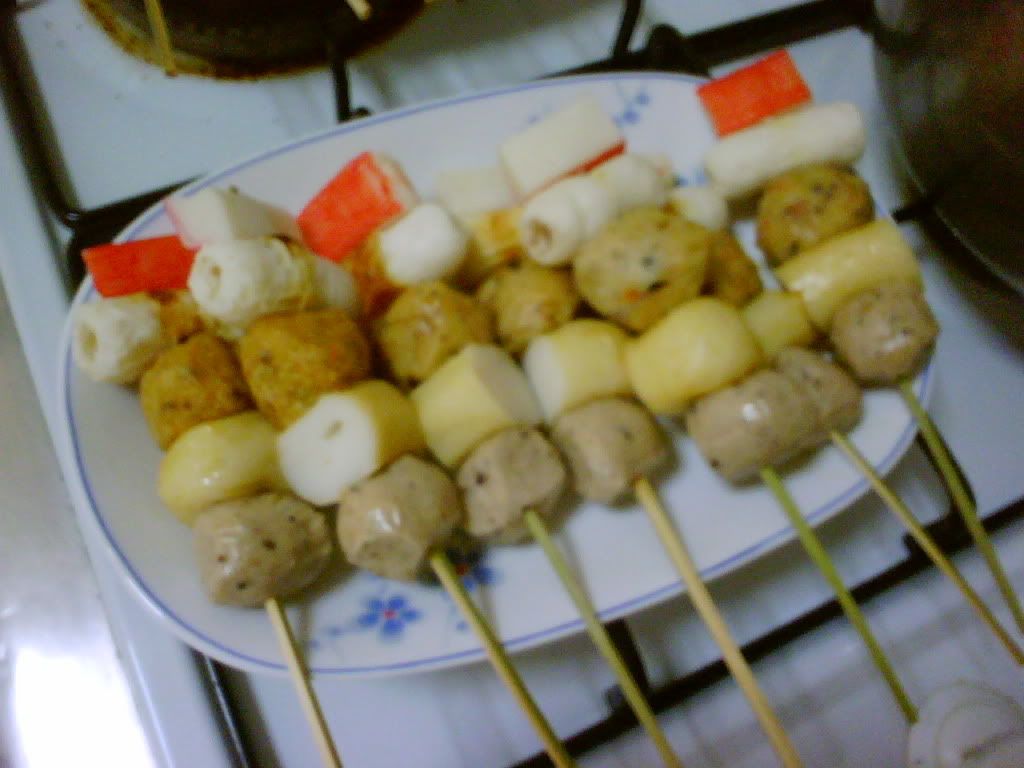
Friend is crashing over my place for Ma La Hotpot. Due to the wet weather, it is ideal for hotpot. Rather than doing those normal style hotpot, I decide to do Lok Lok Hotpot for novelty. Lok Lok Hotpot is whereby the food condiments skewer on bamboo stick and cook in the hotpot. I did a basic skewer with standard cooked items and special chicken skewer and got quite a positive response from my friend.

Cooked Food Lok Lok
  • Bamboo Skewers (retail at $2 at Daiso)
  • Vegetable FIsh Balls
  • Mushroom Pork Meat Balls
  • Fake Crab Sticks
  • Chikuwa
  • Fried Fish Roll
You do not need to follow strictly the skewer items listed above. Feel free to experiment with other cooked items for the cooked food lok lok. Before you skewer the food items, check the depth of the hotpot with a skewer to see how much you food items you can skewer to ensure it could be fully cook when you immerse it in the hotpot .


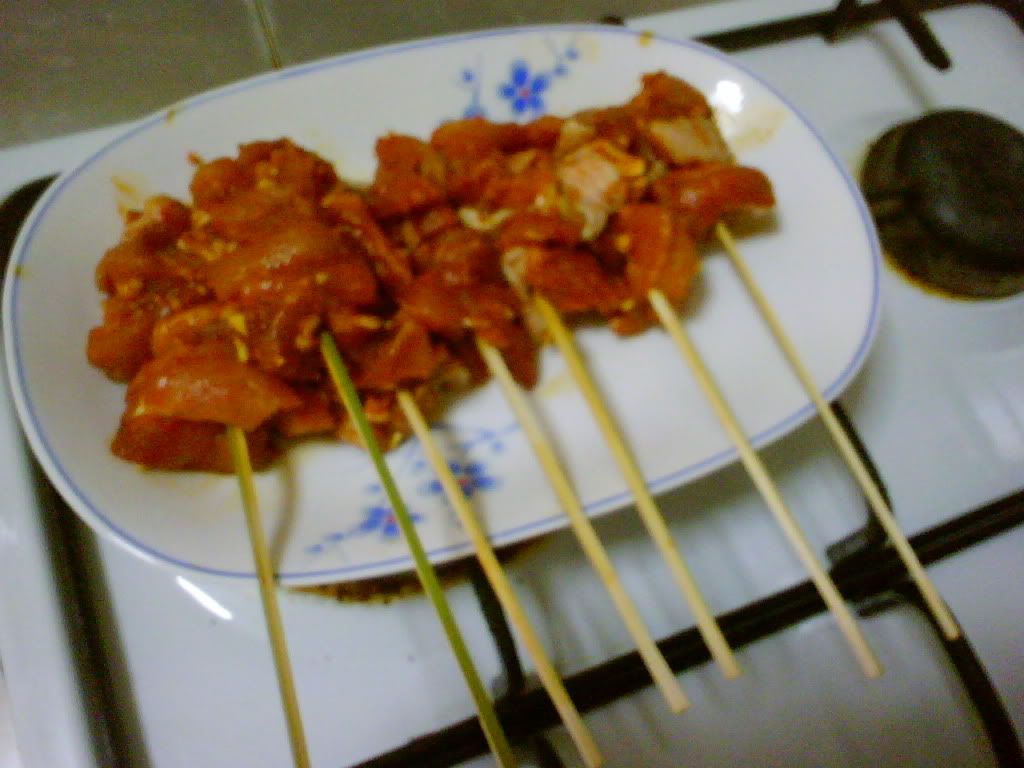
Marinated Chicken Lok Lok
  • Bamboo Skewers (retail at $2 at Daiso)
  • 1 Chicken Thigh Chopped Chunk
  • 1 Teaspoon of Garlic Puree
  • 1 Teaspoon of Ginger Puree
  • 1 Teaspoon of Cumin Powder
  • 1 Teaspoon of Chili Powder
  • Salt
Marinate the chicken chunks with garlic, ginger, cumin and chili powder with a pinch of salt overnight. As Daiso's bamboo skewer is pretty thick so if you need to take care in skewering the chicken pieces as you need use certain amount of prodding to poke through the meat. This marinated chicken lok lok taste equally fabulous if you pan fry or grill it.

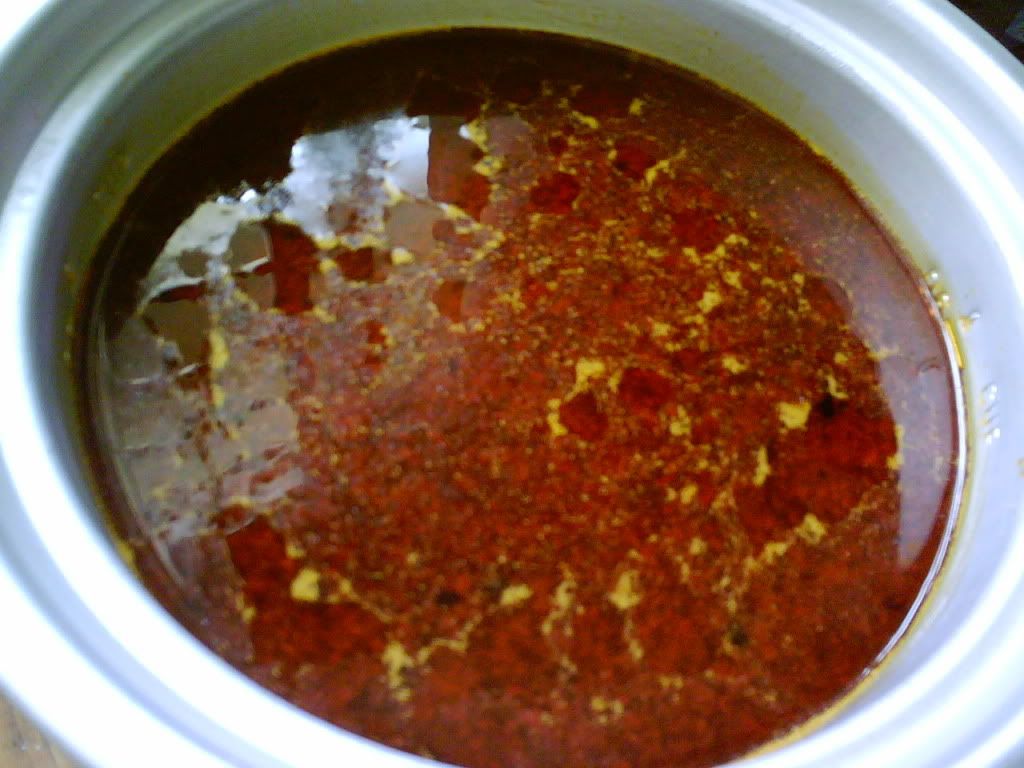
  Mala Hotpot Hotpot Soup
  • Mala Hotpot Soup Pack (retail $1.60 at Sheng Siong)
  • 3 to 4 cups of Water
The Mala Hotpot Soup pack sold in Sheng Siong is heavily flavored, therefore you only need 3 to 4 cups of water boil it before you add in the Mala soup pack. Do not add in the whole mala soup pack into boiling water. Add in by tablespoon and do a taste test until the hotpot soup reach the spice level you are comfortable with. Then, you are ready to have a hotpot fiesta.

Sunday, August 30, 2009

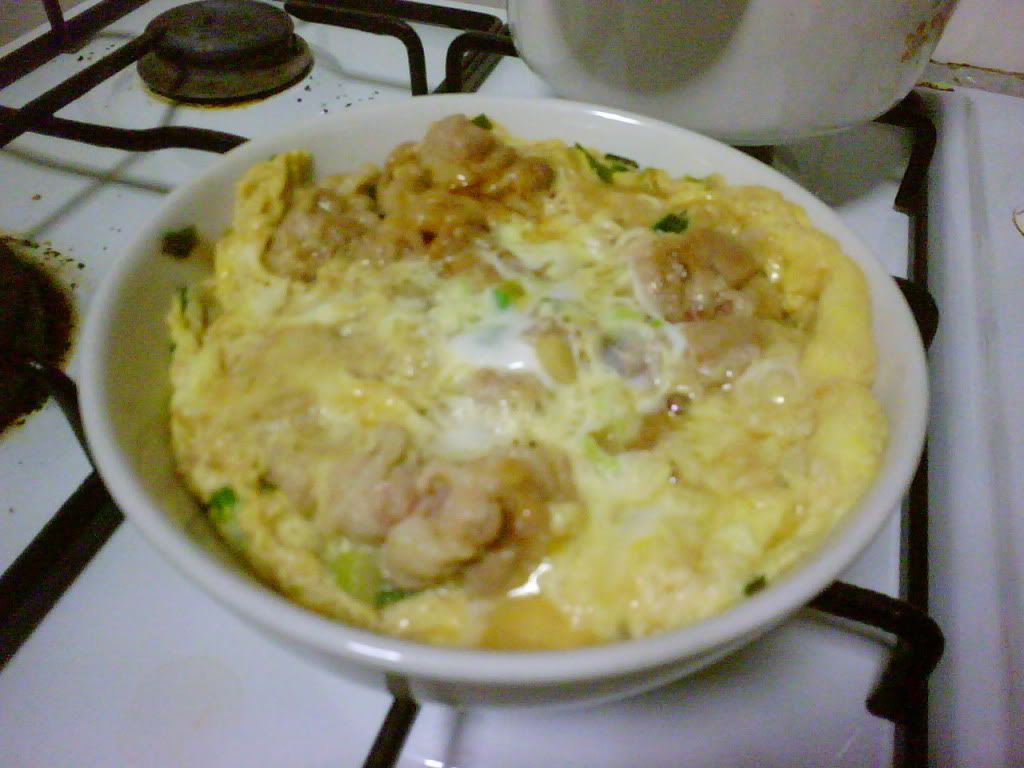
Donburi Series - Tamago Butadon

This Tamago Butadon recipe is really belated as it was created last tuesday. Due to heavy work engagement and busy "burning" TVB drama during the weekend, I'm only able to post it now.

If you like Yoshinoya's Beef bowl, you will like this Tamago Butadon as it taste similar with just a fraction of price. I'm quite surprised the Tamago Butadon turn out quite good as the pork slice is very tender and juicy just like Yoshinoya's beef slice.

 Tamago Butadon

  • 1/3 portion of Por Kee Shabu Shabu Pork (available at NTUC price $5.90)
  • 1 Sprig of Spring Onion
  • Oyakodon Season Mix (Available at Cold Storage or Mediya) or Chicken Stock
  • 2 Tablespoon of Sugar & Soya Sauce (If you don't have Oyakodon Mix)
  • 1 Bowl of Cooked Rice
  • 1 Teaspoon of Wine/Mirin
  • 1 Tablespoon of Cooking Oil
  • 70ml of water
  • 1 Egg
Heat up the donburi pan with 1 tablespoon of cooking oil and add in the finely chop spring onion. Next add in the Por Kee Shabu Shabu pork equally distributed across the pan (make sure you separate the pork slice and not big chunk as you might have difficulty in cooking them thoroughly). Add in the oyakodon season mix or 2 tablespoon of sugar and shoyu together with 1 teaspoon of mirin into the pork and add in 70ml of water. You do not need to wait for it to boil before you can pour in the whip egg. Make sure the egg is evenly distributed across the pan and cover it with the lid. The reason you do not need to wait for the pork slice to fully cook to add in the rest of ingredient as you dun wan the pork slice to become overcook and become tough.

After 5 mins, you can open the lid and you notice the egg is 90% cooked you can turn off the stove and gently slide it into the bowl fill with warm rice. For those who dun like it well done can run it through the microwave at high settings for 1 mins.

Sunday, January 27, 2008

Tiong Bahru Reminisce Part 2


After morning course finished, I decided to walk down leisurely to Tiong Bahru Market. This time I remembered to capture the rustic post colonial building with my PSP cam. As you can see the place seem to untouched by the rapid urbanization brought forth by the Singapore government. However, urbanization signs already creeping in. Nevertheless, I enjoyed whatever that left as I walked down to Tiong Bahru Market.


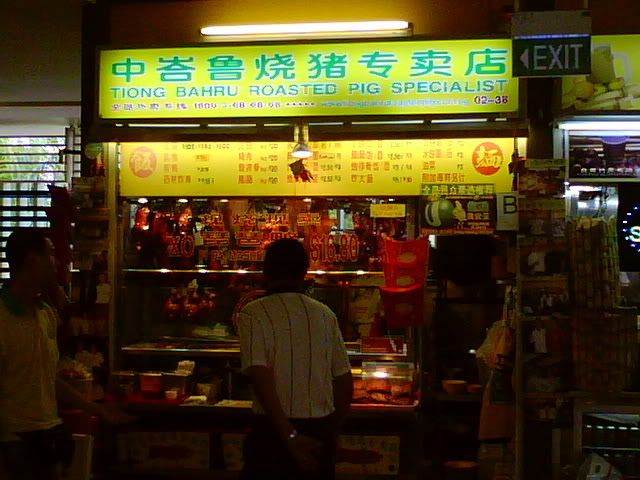
This is one of the famous food stalls in Tiong Bahru that specialised in Roasted Pig (Roast Suckling Pig) and was showcased in many food variety show in Channel U and 8. I decided to give it a try since there isn't much of a queue.


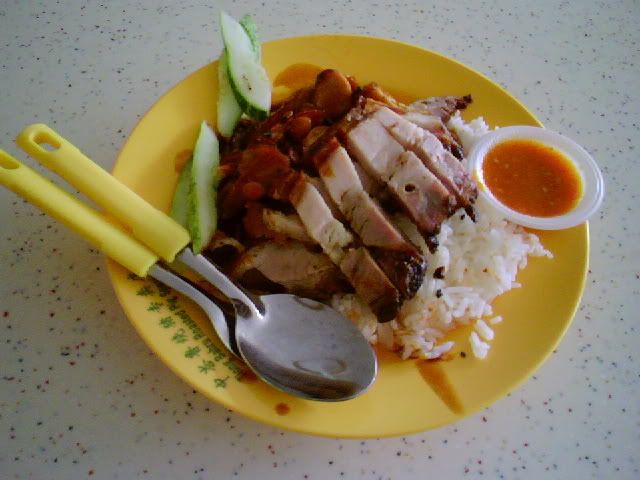
Since Roast Suckling Pig price had jump due to shortage of supply from China, I decided to go for the cheaper alternative (Charsiew & Roast Pork rice) $5.00 SGD since Roast Suckling Pig price had jump due to shortage of supply from China. The Charsiew is rather lean but very tender unlike those comtemporary Charsiew rice stall out there whereby the pork was roasted too long result it being too tough. It is not sweet to extent of overpowering the pork . However, I prefer my Charsiew to have traces of pork fat adhere to the meat which those health conscious beings will shun. Charsiew tends to taste better with some pork fats as it protect the meat from being overcook and maintain its succulency.

Next, the Roasted Pork is pleasantly crispy at the skin and the fatty portion doesn't cover over 70% of it as compared to those Roasted Pork you find in others store. Unfortunately some of roasted pork skin is rather tough probably due to Singapore high humidity that result in the skin loses it crispiness and become tough. In conclusion, overall the charsiew roasted pork rice is pretty good but I believe there is a lot of room for improvement considering they had garnered so media recognition and awards.

Saturday, December 29, 2007

Ma Ling Luncheon Meat - Where are you?


Since the report of ban antibiotic in Maling Brand of Luncheon meat and AVA decision to ban the sale of Maling Brand luncheon meat in Singapore, the well-known luncheon meat has vanish without a trace in all corners of Singapore. It is a doom-day announcement for those plain congee lovers that enjoy the tinge of saltiness that is inherent in Maling luncheon meat that no other brands of luncheon meat can beat.

Lately rounds of grocery shopping, I found a new product (Ayam Brand Fish Luncheon Meat) that might or might not fulfill your luncheon meat cravings. It could be found in most local supermarket at $2.35 SGD. This fish luncheon meat made primarily from Jack Mackerel comes in 3 flavours - Orginal, Pepper & Chili. I prefer to go original since that the best way to really taste if this fish luncheon meat can satisfied my cravings.

The Fish Luncheon meat texture is like that of Tau Kua (Hard Beancurd). It got mackerel taste without fishiness that one would expect. It is mildly salted ideal for those sodium conscious. Unlike normal pork luncheon meat, it is lightly coated with oil so hardcore luncheon meat fans might be disappointed but health conscious advocate probably will applauded for this change.
It taste best when you pan fried it as it soften under heat so you don't feel like eating Tau Kua but luncheon meat. Overall, I will give it a one thumbs up as it pretty innovative food product and the taste isn't that far from being in the luncheon meat category. For hardcore fan, I got another good news if you looking for Maling luncheon, you can find some stock (approved for sale by AVA) in one of the supermart called Good Luck Supermart selling $3.20 SGD at 39 Geylang Serai, Geylang Serai Malay Village, Singapore 409227